The method

How Wolbachia-based biocontrol works.

The biology

A bacterium that disrupts the dengue transmission cycle.

Wolbachia is a naturally occurring intracellular bacterium found in roughly half of all insect species. It is not a pathogen. It passes from mother to offspring through the egg, making it self-perpetuating once introduced into a population.

Aedes aegypti, the primary dengue vector in urban Southeast Asia, does not naturally carry Wolbachia. Introducing specific strains into Ae. aegypti produces two outcomes: it can cause eggs from incompatible crosses to fail to develop, and certain strains substantially reduce the mosquito's capacity to transmit dengue.

These two properties are the basis for the two strategies our platform delivers. The mosquitoes used are not genetically modified; Wolbachia is introduced through a rearing process, not gene editing.

Key biological properties

  • Cytoplasmic incompatibility (CI)

    When a Wolbachia-infected male mates with an uninfected female, the resulting eggs fail to hatch. This is the biological engine of population suppression via IIT.

  • Dengue virus blocking

    Certain Wolbachia strains suppress dengue virus replication inside the mosquito, reducing the probability of transmission to humans.

  • Maternal inheritance

    Wolbachia is passed from infected female to offspring. In replacement programmes, this drives the strain through the wild population without ongoing intervention once establishment is achieved.

  • Non-GMO

    The mosquitoes' DNA is not edited. Wolbachia is a naturally occurring bacterium introduced through rearing, not gene editing. The mosquitoes are not GMOs.

The two strategies

Population suppression and population replacement, both field-validated.

Both strategies are available from the same platform. Selection is based on programme objectives, regulatory environment, and the long-term model the implementing agency is working towards.

Suppression · IIT

Population suppression

Male, non-biting mosquitoes carrying Wolbachia are reared at scale and released into target zones on a regular schedule. Cytoplasmic incompatibility causes the resulting eggs to fail to develop, progressively suppressing the local population.

  • Male-only releases; Wolbachia does not establish in the wild population
  • Requires sustained, scheduled releases to maintain suppression
  • Near-elimination of wild Ae. albopictus in Guangzhou (Nature, 2019)
  • 97% egg reduction and 85% female reduction in Changsha (Communications Biology, 2022)
  • Suitable for bounded zones, high-density urban settings, or time-limited campaigns
Replacement · Disease blocking

Population replacement

Male and female mosquitoes carrying a disease-blocking Wolbachia strain are released. The CI advantage spreads the strain through the wild population over time. Once established, it reduces dengue transmission across the zone with reduced ongoing releases.

  • Mixed-sex releases aimed at population-level Wolbachia establishment
  • Self-sustaining once the strain reaches threshold frequency
  • Addresses disease transmission rate across the population
  • Durable reduction in dengue risk; persists across mosquito generations
  • Regulatory pathway involves environmental spread assessment

Combined approaches, where Wolbachia-based incompatibility is combined with additional sterilisation for higher containment assurance, are also available. Both strategies draw from the same production infrastructure.

Production infrastructure

The automation that makes programme scale viable.

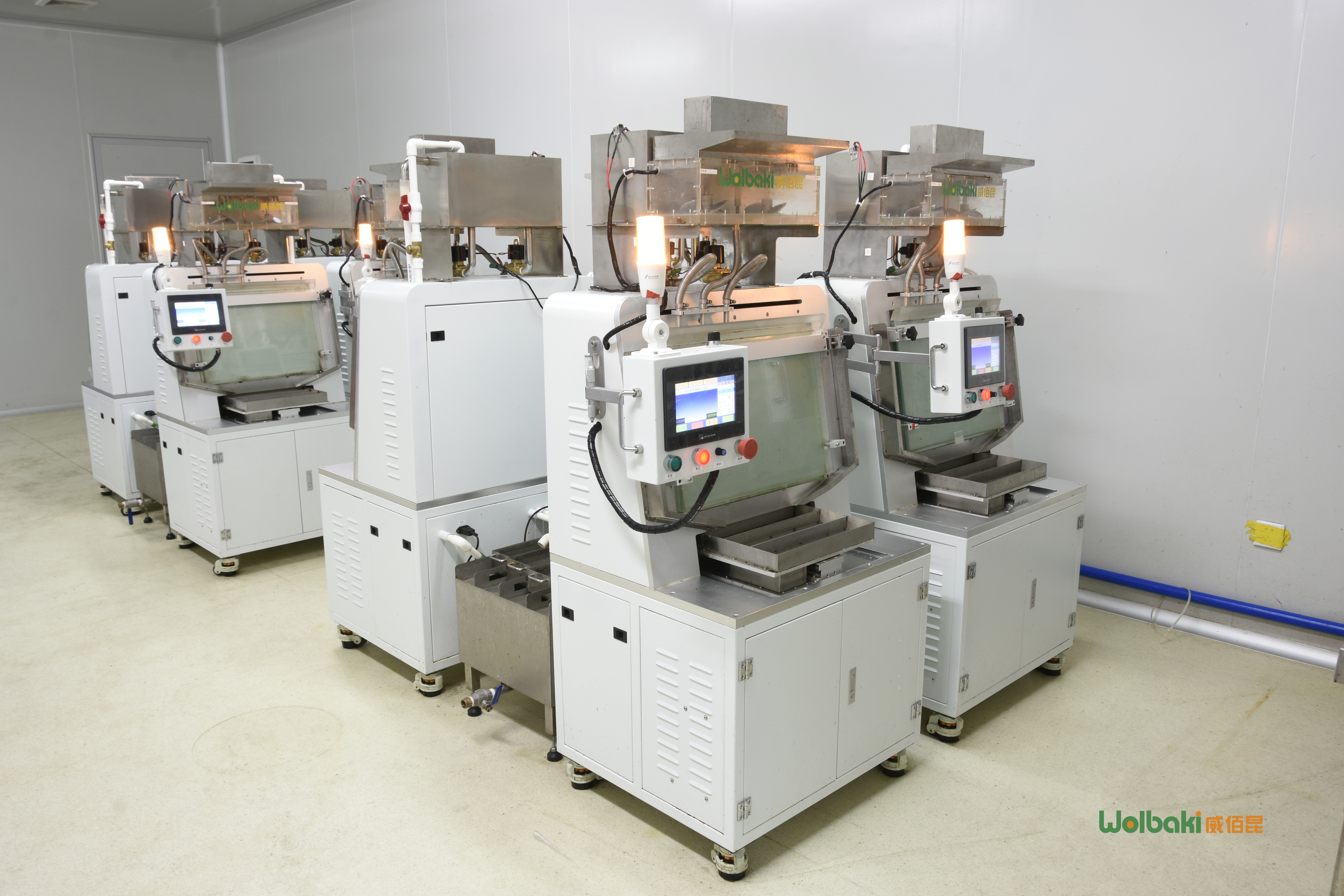
IIT programmes require large numbers of male mosquitoes released on a consistent schedule. This is operationally demanding, particularly the sex-separation step, where even a small proportion of released females can compromise programme integrity. Our production partner has solved this at a scale no competitor has matched.

Automated mosquito sex-sorting production facility
Automated sex sorting

16 million pupae per week, approximately 17× faster than manual methods, with ~0.5% female contamination. Published in Science Robotics (2024).

Full rearing system

Larval rearing, adult rearing, and sex-sorting systems developed and manufactured in-house by our production partner. Already deployed worldwide.

Configurable scale

Production infrastructure established in-country, scaled to match programme requirements rather than fixed at a central facility.

Quality assurance

Wolbachia infection confirmation, sex verification, fitness monitoring, and release-readiness criteria applied at each stage.

Published field evidence

Results that come from real programmes.

Near-elimination
Wild population

Guangzhou landmark trial

A landmark field programme achieved near-elimination of wild Ae. albopictus across urban trial zones. One of the most significant published demonstrations of IIT-based mosquito suppression at programme scale.

90.9%
Indoor suppression

Merida, Mexico IIT-SIT trial

The first open-field IIT-SIT trial in Latin America. Mass releases of wAlbB-infected Ae. aegypti males over 24 weeks achieved 90.9% suppression of indoor female Ae. aegypti density compared to an untreated control site, implemented as part of an integrated vector management plan led by Mexico's Ministry of Health.

16M
Pupae/week

Production automation at scale

Our production partner's automated sex-sorting system processes 16 million pupae per week, approximately 17× faster than previous methods, with ~0.5% female contamination. Deployed in operational programmes worldwide.

Beyond public health

Wolbachia for agricultural pest control

Protecting crops from virus-transmitting insects.

Explore →

Take the next step

Explore what approach fits your programme

IIT suppression, population replacement, or a combined approach. We assess your context and propose the right configuration.

For agencies